
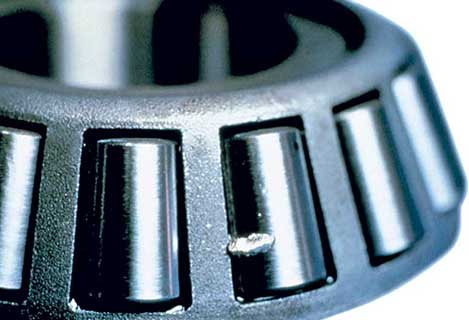


can result in grooving. Photo courtesy of The Timken Co.
Consider following these steps when investigating any bearing damage:
1. Gather operating data from bearing monitoring devices; analyze service and maintenance records, as well as charts; and secure application diagrams, graphics and engineering drawings.
2. Prepare an inspection sheet to capture observations, and take photographs throughout to document or describe damaged components.
3. Extract any used lubricant samples from bearings, housing and seal areas to determine lubricant conditions. Package these separately, and label them properly.
4. Secure a sample of a new, unused lubricant. Record any specification/batch information from the container, and obtain the technical specifications and any related material safety data (i.e., handling, disposal, toxicological) documentation to accompany lubricant shipments.
5. Check the bearing environment for external influences, like other equipment problems, that preceded or occurred at the same time bearing damage was reported.
6. Disassemble the equipment and record an assessment of the mounted bearing condition.
7. Inspect other machine elements, including locknuts, adapters, seals and seal wear rings.
8. Mark and record the mounted position of the bearings and components prior to removal.
9. Measure and verify shaft and housing size, roundness and taper using certified gauges.
10. Following removal, but before cleaning, record observations of lubricant distribution and condition.
11. Clean parts and record the manufacturer’s information from markings on the bearing rings (i.e., part number, serial number, date code).
12. Analyze the condition of the internal rolling contact surfaces, load zones and the corresponding external surfaces.
13. Apply preservative oil and repackage the bearings to avoid corrosion.
14. Compile a summary report of all data for discussion with a trusted sales or service engineer.